- What "DIY Coordinating" Actually Involves
- A Timeline Document You Actually Trust
- A Vendor Contact and Contract Tracker
- A Real Budget Tracker, Updated as You Go
- Someone to Run the Actual Day
- Keeping Inspiration and Decisions Organized
- A Shared Checklist Everyone Can See
- Setting Boundaries With Well-Meaning Helpers
- Learning From Other DIY Weddings
- Building In Realistic Buffer for Yourself
- When to Reconsider and Bring in Professional Help
- Building a Vendor Communication Rhythm
- What a Realistic DIY Timeline Looks Like
- Celebrating the Wins Along the Way
- Keeping a Running List of Open Questions
- It's Fine to Ask for Help Along the Way
- The Payoff
- FAQ
Deciding to coordinate your own wedding instead of hiring a planner is a genuinely reasonable choice, but it means the organizational load that would normally sit with a professional now sits with you. Here's what actually helps DIY brides stay on top of it without losing their minds.
What "DIY Coordinating" Actually Involves
Coordinating your own wedding doesn't mean doing every task yourself, most DIY brides still hire photographers, caterers, and florists. It means you're the one holding the overall plan together: choosing vendors, tracking the budget, building the timeline, and making sure everything lines up. The job is coordination, not necessarily execution of every individual piece.
A Timeline Document You Actually Trust
The single most important coordination tool is a finalized, detailed timeline that accounts for every vendor's arrival and every transition in the day. Build it well ahead of the wedding, share it with every vendor and your wedding party, and treat it as the single source of truth rather than something that lives partly in your head and partly in scattered texts.
A Vendor Contact and Contract Tracker
Keep every vendor's contact info, contract terms, and payment schedule in one place you can reference quickly. This matters more than it sounds like it would, since final questions and confirmations tend to cluster in the weeks before the wedding, and hunting through email threads for a contract detail under time pressure is avoidable with basic organization.
A Real Budget Tracker, Updated as You Go
Set up a budget tracker early and actually update it as deposits and payments happen, not just at the start. A budget that was accurate in month one but hasn't been touched since is functionally useless by month eight. A simple spreadsheet with a column per category, updated monthly, beats an elaborate system nobody keeps current.
Someone to Run the Actual Day
Even the most organized DIY bride shouldn't be the person checking the clock and directing vendors on the wedding day itself. Whether that's a hired day-of coordinator or an extremely reliable, detail-oriented friend or family member, someone besides the couple needs to hold the finalized timeline and keep things moving. This is the one role worth budgeting for even in an otherwise fully DIY wedding.
Keeping Inspiration and Decisions Organized
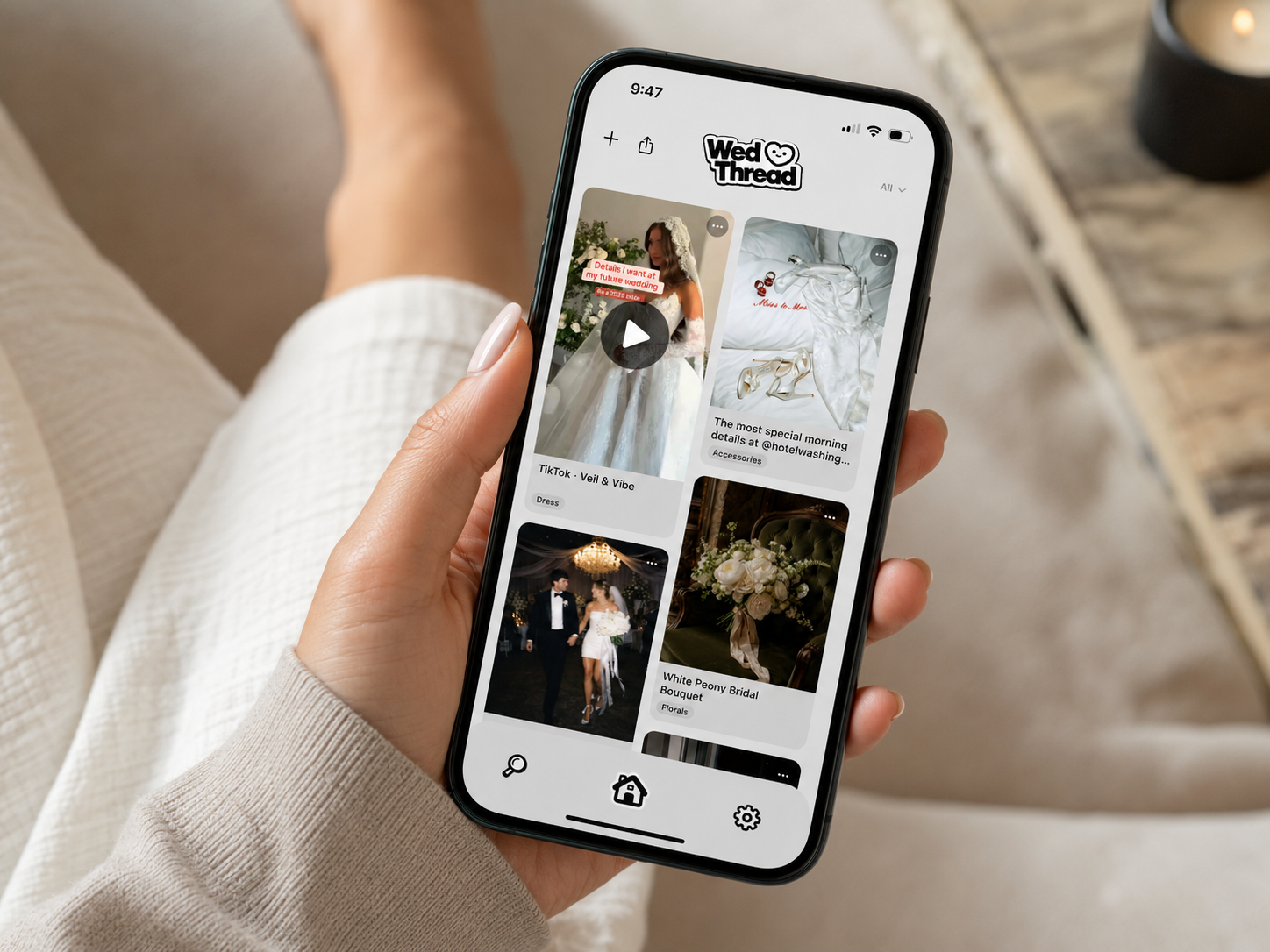
This is where a lot of DIY coordination quietly falls apart. Decisions get made in bursts, months apart, and without something tracking the reasoning, it's genuinely hard to remember why you picked one florist's proposal over another, or which centerpiece style you'd settled on. WedThread solves this specific piece: saving links, photos, and screenshots from anywhere and sorting them automatically into categories like Vendor, Decor, and Venue, so a decision made in March is still easy to trace back to in October.
A Shared Checklist Everyone Can See
For any tasks split among a partner, family, or wedding party, a shared checklist beats a mental list every time. It doesn't need to be elaborate, a simple shared doc with owner names next to each task works fine, but it needs to actually be shared and updated, not just exist in the planner's head.
Setting Boundaries With Well-Meaning Helpers
DIY coordination often means fielding a lot of unsolicited advice and offers to help from family and friends. It's worth deciding early which decisions you're genuinely open to input on and which you're not, and communicating that clearly rather than leaving it ambiguous. This isn't about shutting people out, it's about protecting your own decision-making bandwidth in a process that already has plenty of decisions to make.
Learning From Other DIY Weddings
If you know anyone who's recently coordinated their own wedding, ask them directly what surprised them or what they'd do differently. This kind of specific, lived experience is often more useful than generic planning advice, since it surfaces the small logistical gaps that only become obvious in hindsight.
Building In Realistic Buffer for Yourself
DIY coordination takes real time, more than most first-time planners expect. Build buffer into your own schedule the same way you'd build it into the wedding day timeline, blocking specific hours for planning tasks rather than assuming they'll fit into whatever time is left over after everything else. Underestimating your own bandwidth is one of the most common reasons DIY planning becomes stressful rather than just demanding.
When to Reconsider and Bring in Professional Help
If, partway through planning, the coordination load genuinely feels unmanageable, it's worth reconsidering a hired day-of coordinator even if the rest stays DIY. This isn't a failure of the original plan, it's a reasonable adjustment once you have a clearer sense of your own actual bandwidth. Many coordinators offer month-of packages specifically for couples who've handled everything else themselves and just need help executing the final stretch.
Building a Vendor Communication Rhythm
Rather than reactively checking messages across email, text, and app notifications, set a rhythm for vendor communication, a specific day or two each week to send follow-ups and check on outstanding questions. This keeps you from either falling behind on important confirmations or feeling like vendor communication is a constant background task demanding attention at all hours. Vendors also tend to respond more reliably to a predictable, organized couple than one reaching out sporadically at odd hours.
What a Realistic DIY Timeline Looks Like
A rough shape for DIY coordination: 9 to 12 months out, book major vendors and the venue. 6 to 9 months out, handle attire, invitations, and secondary vendors. 3 to 4 months out, finalize the guest list and send invitations. 6 to 8 weeks out, confirm final details with every vendor. Final 2 weeks, distribute the timeline and pack the emergency kit. This isn't a rigid formula, every wedding shifts slightly, but having a rough shape in mind prevents major tasks from being pushed later than they should be.
Celebrating the Wins Along the Way
DIY coordination is a long process, and it's easy to only notice what's left undone rather than what's already been handled well. Periodically stepping back to recognize genuine progress, a venue booked, a budget on track, a timeline that's actually coming together, helps sustain motivation through a planning process that can otherwise feel like an endless list of tasks.
Keeping a Running List of Open Questions
Throughout planning, keep one running list of unresolved questions, waiting on a vendor reply, unsure about a logistics detail, rather than letting them scatter across notes apps and memory. Reviewing this list weekly and actively closing items out keeps small open loops from accumulating into a stressful pile close to the wedding.
It's Fine to Ask for Help Along the Way
DIY doesn't have to mean entirely alone. Leaning on friends, family, or even a few hours of paid consulting from a planner at key decision points is still a DIY wedding, just a smarter version of one.
The Payoff
Coordinating your own wedding is genuinely more work, but for many couples it's also more rewarding, a wedding shaped entirely by decisions you made yourselves, start to finish.
Yes, plenty of couples do, especially for smaller or more straightforward weddings. It takes more organization on your part, but it's genuinely doable with the right tools and a realistic sense of your own bandwidth.
A planner is involved from early planning through the wedding day, helping with vendor selection, budgeting, and design. A day-of coordinator, sometimes called month-of, steps in closer to the wedding to execute a plan you've already built, running the actual day.
Strongly recommended, even for a fully DIY wedding. Someone besides the couple needs to be running the timeline and troubleshooting on the actual day, whether that's a hired coordinator or a very organized friend.
At minimum: a timeline document, a vendor contact list, a budget tracker, and something to keep saved inspiration and decisions organized. Beyond that, tools should match your specific pain points rather than a generic checklist.
Vendor booking and major decisions typically start 9 to 12 months out. Detailed day-of logistics, timelines, seating, final headcounts, usually come together in the final 4 to 8 weeks.
It handles the piece most DIY brides struggle with most: keeping vendor research, saved ideas, and inspiration organized in one place instead of scattered across apps, so decisions made months apart are still easy to trace back and compare.